Business & Data
Unifor welcomes $2.5-billion auto funding, presses Ottawa and Ontario on Brampton Assembly
The union says federal and Ontario support for automakers must come with enforceable production guarantees, and that the immediate priority is stopping the closure and sale of Stellantis's Brampton plant.
Brampton, ON
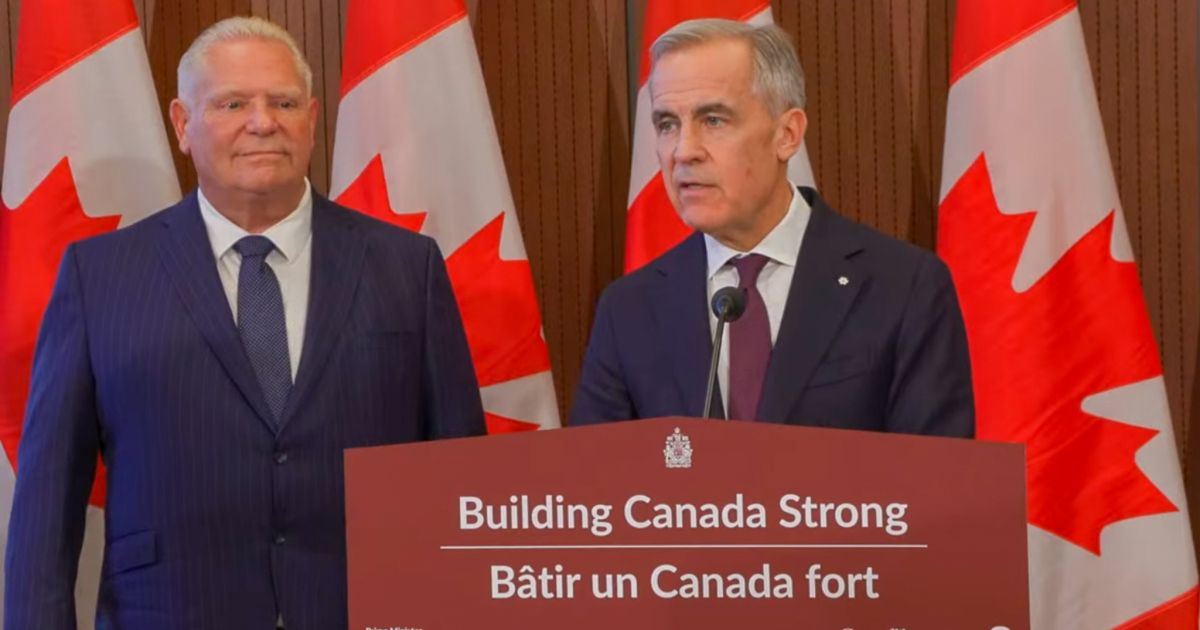
Unifor welcomed a $2.5-billion investment from the federal and Ontario governments in Canada's auto industry on Oct. 21 and urged both governments to focus next on sustaining threatened assembly operations in Brampton, Ontario, the union said in a release.1
The funding, announced as part of a joint Canada-Ontario action plan, is designed to help automakers invest in modern machinery and upgraded production lines amid tariff turmoil, according to Unifor. The release did not break the $2.5 billion down by government or state the period over which it is to be spent.1
Unifor national president Lana Payne said the sector and its workers have been directly targeted by the Trump administration and that support from both governments is essential to see them through the crisis. Payne said the announcement must propel both governments to address the most pressing challenge, which she described as stopping the closure and sale of the Brampton Assembly plant and preserving auto assembly and the jobs it supports.1
Contract talks between Unifor and Stellantis are at an impasse, in part over the company's intent to sell the plant to a defence contractor, ending vehicle production in Brampton and affecting thousands of workers in the local supply chain, according to the union. The release did not name the defence contractor or set out a timeline for the sale.1
In the same talks, the union said it is focused on ensuring Canada's auto production footprint by securing a strong, sustainable future for Stellantis's Windsor and Etobicoke plants. Unifor also said a solution is needed for the idled General Motors CAMI plant in Ingersoll, Ontario.1
Payne described the funding as a vote of confidence in a domestic auto sector that employs half a million Canadian workers. She said it reinforces the message that there is a future for auto manufacturing in Canada and that it must continue to be funded and fought for.1
The union called for public investments to be paired with enforceable commitments, saying multi-billion-dollar funding agreements with automakers must carry strict, long-term guarantees for Canadian production and jobs to prevent investment and manufacturing capacity from moving elsewhere. It also called on the federal government to strengthen its auto industrial strategy by prioritizing Canadian manufacturing, protecting jobs and securing future production, and said policies should reward automakers that invest in Canada rather than subsidize vehicles built offshore with little or no Canadian content.1
Unifor said it continues to urge the government to reconsider its stance on Chinese electric vehicle imports and to focus on building a competitive domestic EV supply chain. Payne said Canada's auto strategy must be measured by the jobs it protects, the investments it secures and the manufacturing future it builds at home, and that public funding must deliver public benefits in the form of good jobs, strong communities and a viable future for auto manufacturing in Canada.1
Unifor describes itself as Canada's largest private-sector union, representing 320,000 workers across major areas of the economy. The release did not say when the government funding is to flow or what conditions, if any, the two governments have attached to it.1
AI-assisted reporting under human editorial direction. Our editorial approach.



Comments
No comments yet.