Business & Data
Unifor's Payne urges committees to 'pump the brakes' on Bill C-39 strike powers
The Unifor national president told a Senate committee and a House of Commons committee that the bill's national interest test would let the labour minister end strikes unilaterally, and that the change would reshape bargaining before any minister acts.
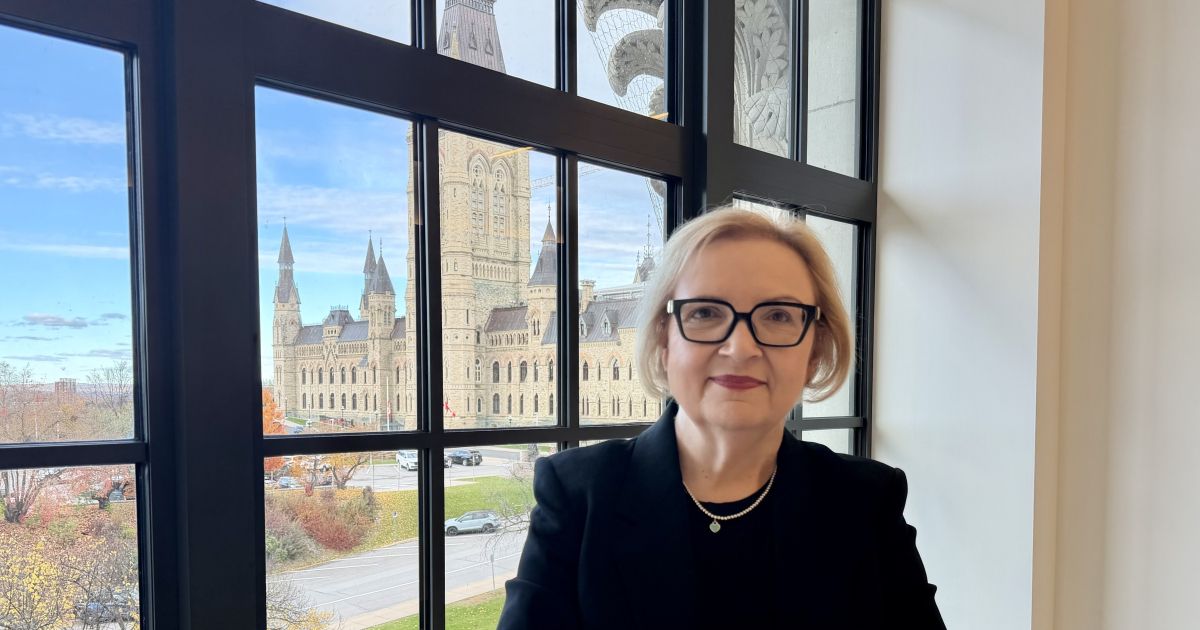
Unifor National President Lana Payne told a Senate committee and a House of Commons committee studying Bill C-39 on Oct. 26 that the legislation would let the Minister of Labour end a strike unilaterally and immediately in federally regulated sectors, end negotiations and send the contract to an arbitrator, a decision the minister would make on whether the strike affects Canada's national interest, the union said.1
Payne's testimony centred on what the union described as the bill's infringement on the right to strike and its knock-on effect of curtailing collective bargaining itself. The union said the legislation is being rushed through both the House of Commons and the Senate.1
The national interest test
Payne argued the test the minister would apply is too broad to constrain the power. "The national interest test is so broad it is defined simply as having an 'economic impact' or causing 'serious social disruption'. All strikes have economic impacts. It's the entire point of a strike," she said, according to the union.1
Canadian Labour Congress President Bea Bruske, on the same Senate panel, said the new Section 107 of the Labour Code makes "the minister's opinion and the law are one and the same," the union said.1
There are those who think these changes will result in less conflict at bargaining tables, fewer disputes. I disagree and I'm here to say: it's time to pump the brakes.1Lana Payne, Unifor national president, to federal committees
Payne said the power would change employer behaviour before any minister used it. "If employers believe the government will intervene on their behalf, this changes their bargaining tactics and strategy," she said. She also said big federal employers "have not been shy about their demands to weaken the very rights workers depend on to improve their livelihoods, make their workplaces safer, or advance equality."1
DHL cited as precedent
In its submission, Unifor pointed to a recent round of negotiations at DHL Express, where the employer asked the minister to intervene on its behalf to end the union's job action. "Only after it understood that there would not be a Ministerial intervention under section 107 was DHL moved to bargain and soon reach a deal with Unifor. In this and other similar cases, the Government created an expectation of intervention - a problem that Bill C-39 will make worse," the union said.1
The union said the bill also contains two changes that support workers' rights: support for a union's first contract and an end to contract flipping at airports. Payne urged the government to protect both. "Ending contract flipping is especially important given the looming threat of airport privatization. And newly organized workers should be able to get a first collective agreement in a timely fashion. Employers should not be able to circumvent their right to a union by using egregious stalling tactics," she said.1
Through its involvement in the Canadian Telecommunications Workers Alliance, Unifor also participated in a separate submission on the legislation, arguing it is incongruent to claim to protect telecommunications infrastructure while placing no limits on offshore outsourcing of the operations of that infrastructure, the union said. Unifor members are pressing their case to MPs and senators through a petition, the union said.1
Prepared with reporting tools under our editorial standards. Our editorial approach.


Comments
No comments yet.